From Pioneer to Global Leader
The $500M brand
What a journey. From initial meetings with the founders and first employees in 2014 to the $500 million acquisition by Axon in 2023, I had the privilege of shaping the Dedrone brand for 11 years (nine as a contractor, then two as a full-time employee) and transitioning it into the Axon universe in 2025.
I worked alongside exceptionally smart, passionate people who embodied that classic startup energy. I discussed the first UI concepts with Rene Seeber, created pitch decks for renowned entrepreneur Jörg Lamprecht, and eventually collaborated closely with the inventor of the counter-drone industry, Dr. Ingo Seebach, on projects including presentations for Ukraine.
I collaborated with talented people across every department, far too many to name without turning this into a novel. But I must highlight Friederike Nielsen, the former CMO, with whom I laid the foundation of the Dedrone brand identity. Later, with Mary-Lou Smulders, we launched the brand's next evolution. Together with a lean team of just 5 to 10 people, we built and managed a global brand.
Looking back, it's remarkable that for nearly a decade, I was the sole strategic designer at Dedrone. I created and developed the entire visual identity, designed the website and established dedrone.com at the top position on Google for the most important keywords. I developed key visuals, social posts, packaging, pitch decks, company kickoffs, swag, awards, and more projects (see below), continuously evolving the brand as the company scaled.
It was an incredible responsibility and an even better learning experience. I have no regrets. I would undertake this journey again in a heartbeat.
Some of my biggest achievements are highlighted on this page.
Enjoy the read.
Build
“It’s rare to find someone who combines exceptional creative talent with true strategic thinking, and Sebastian is one of those rare professionals.”
Scale
11 Years of Brand Consistency
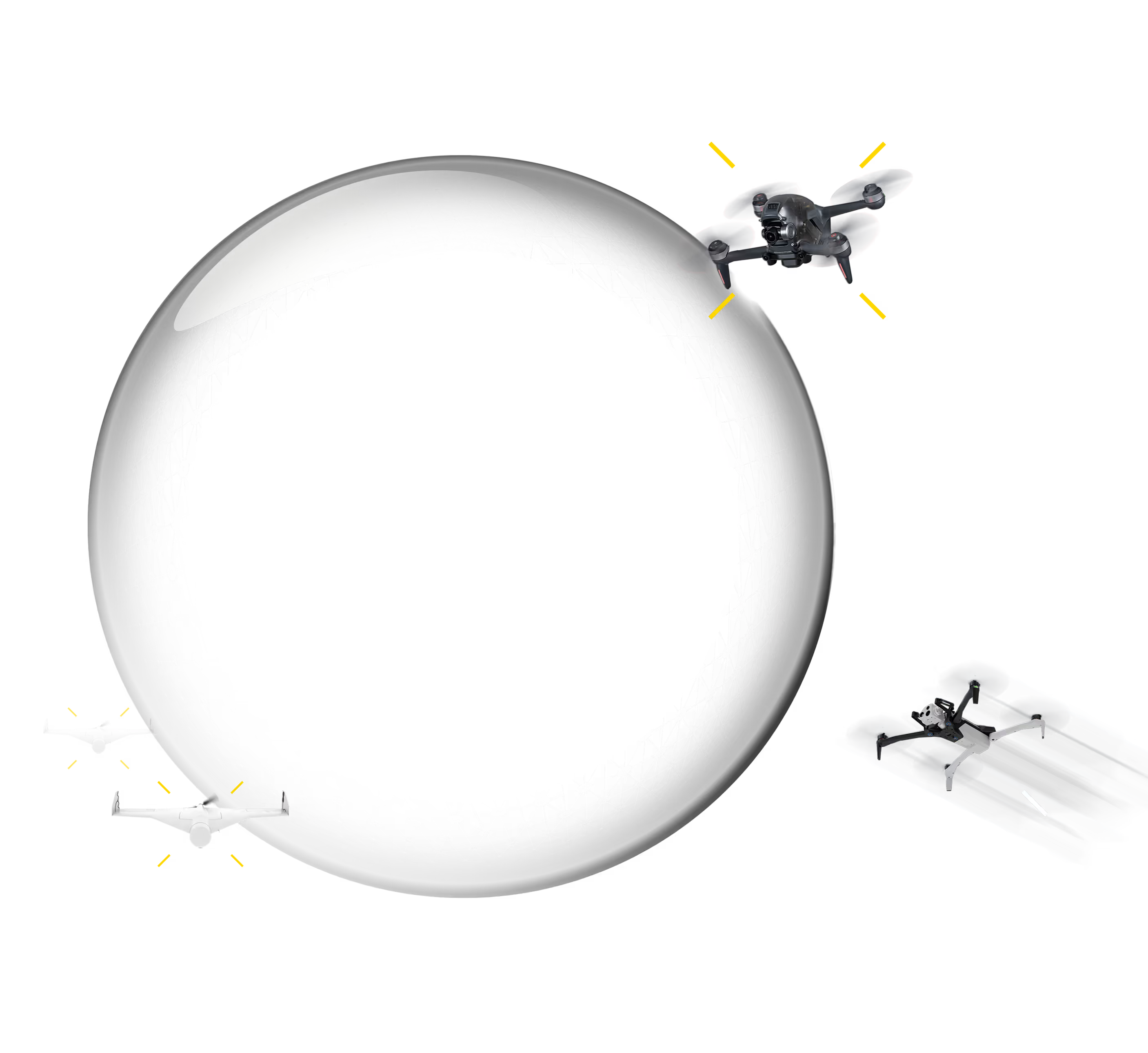
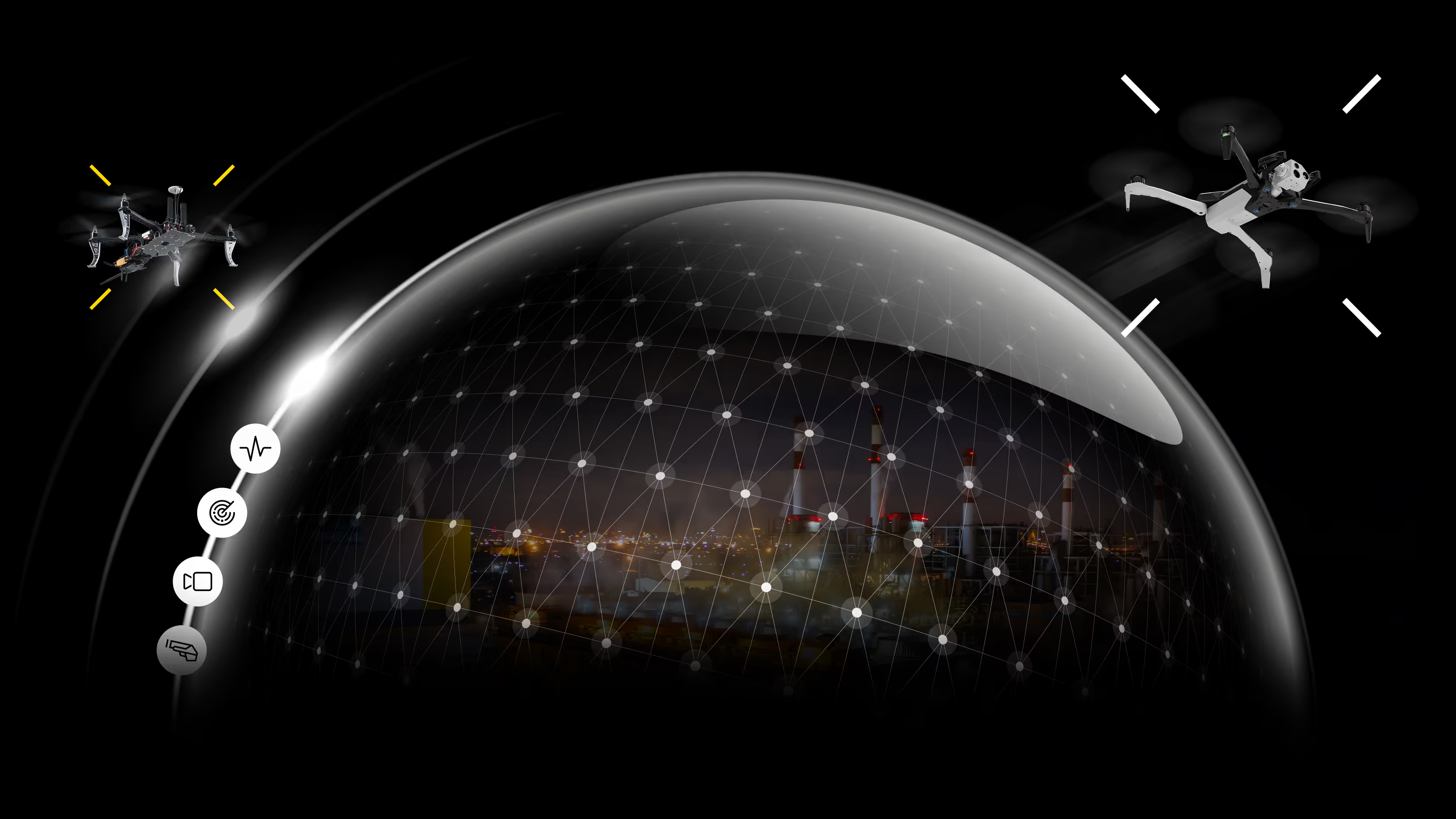
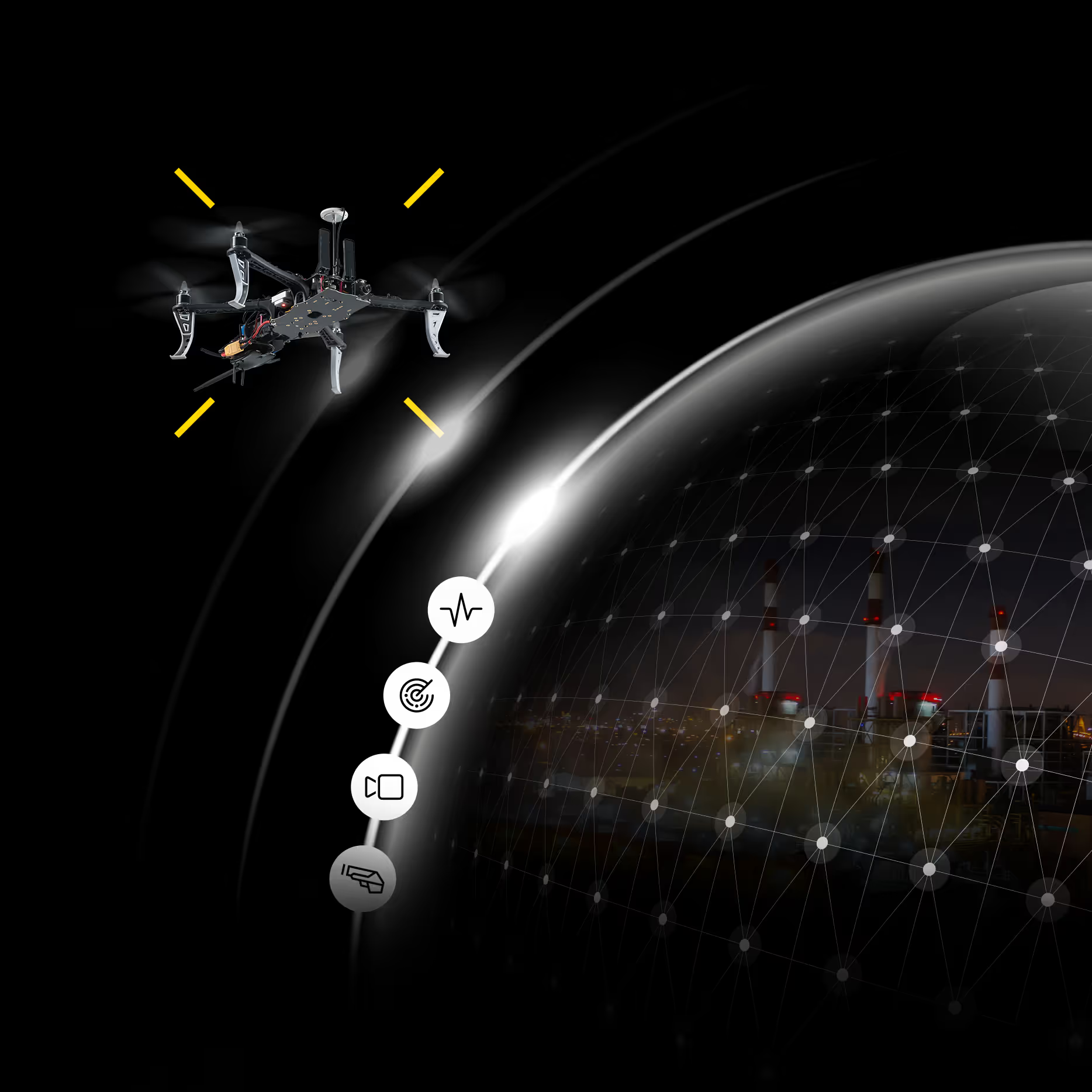
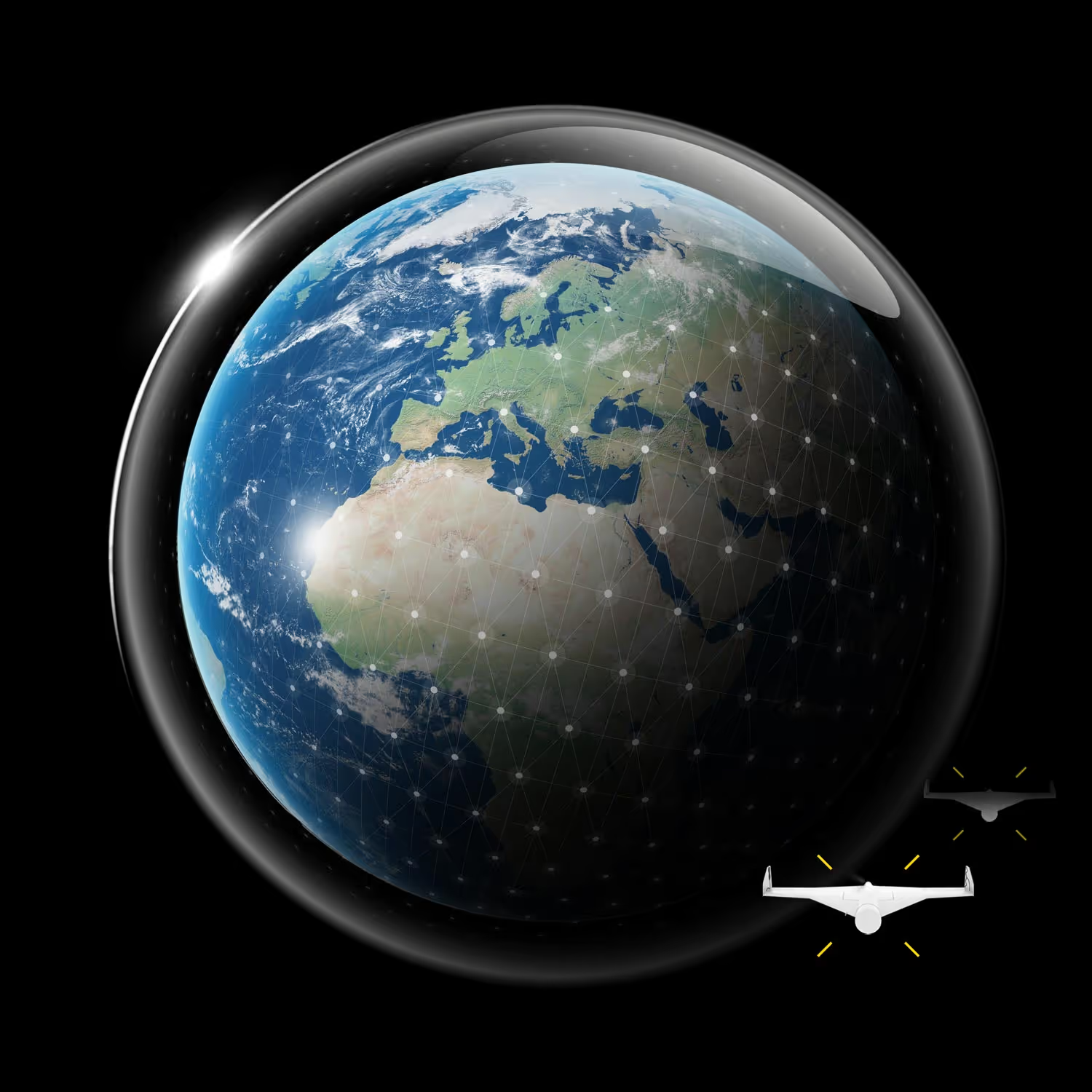
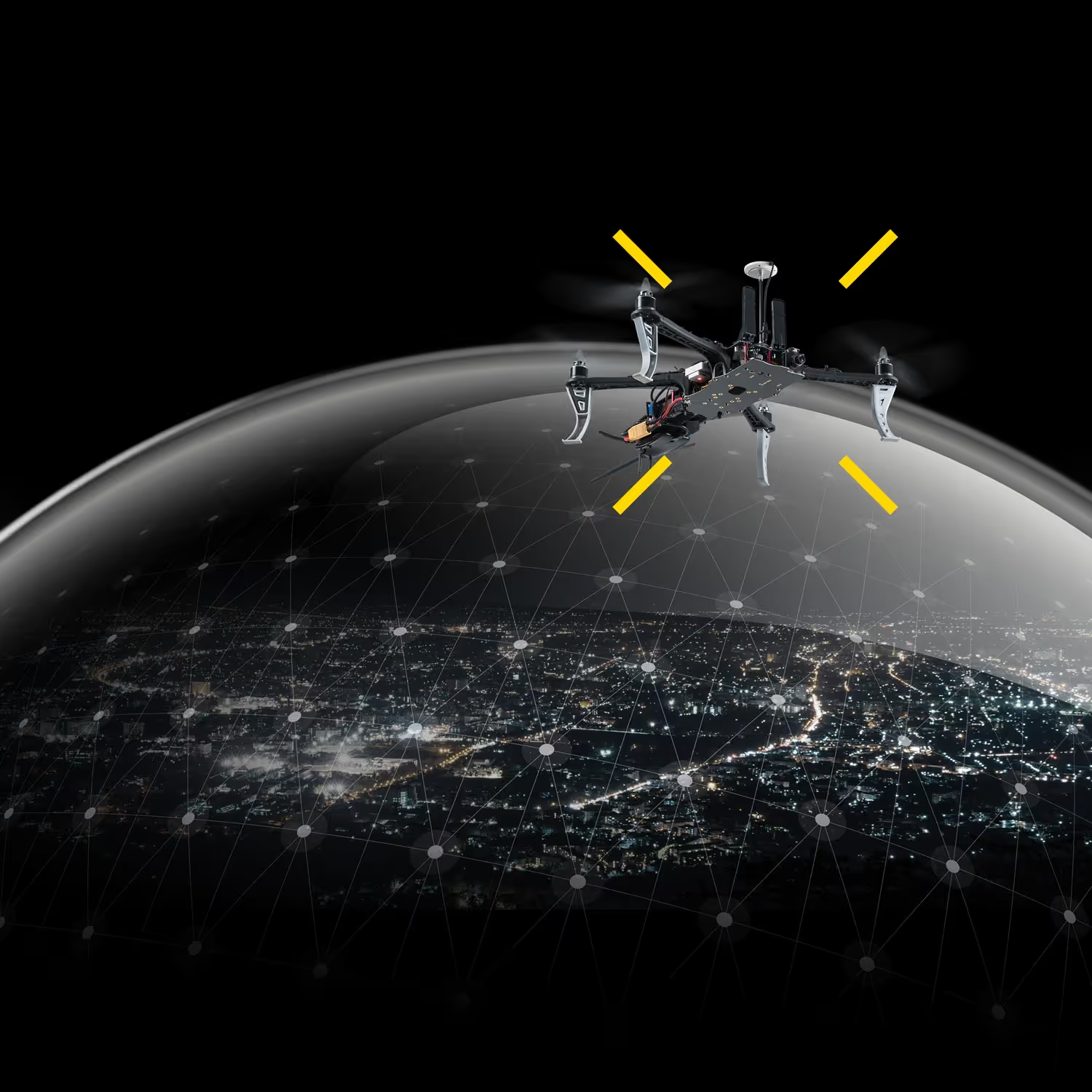
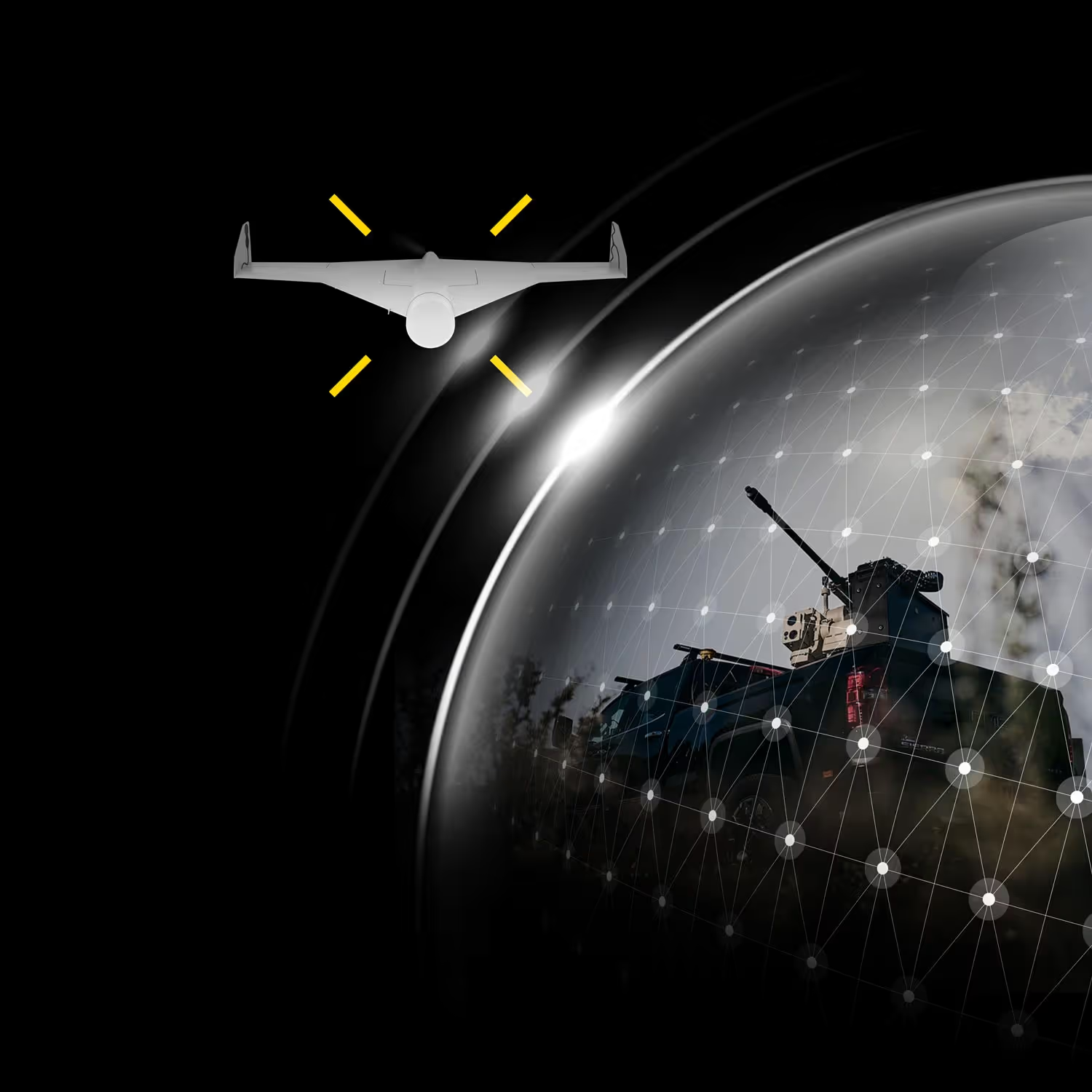
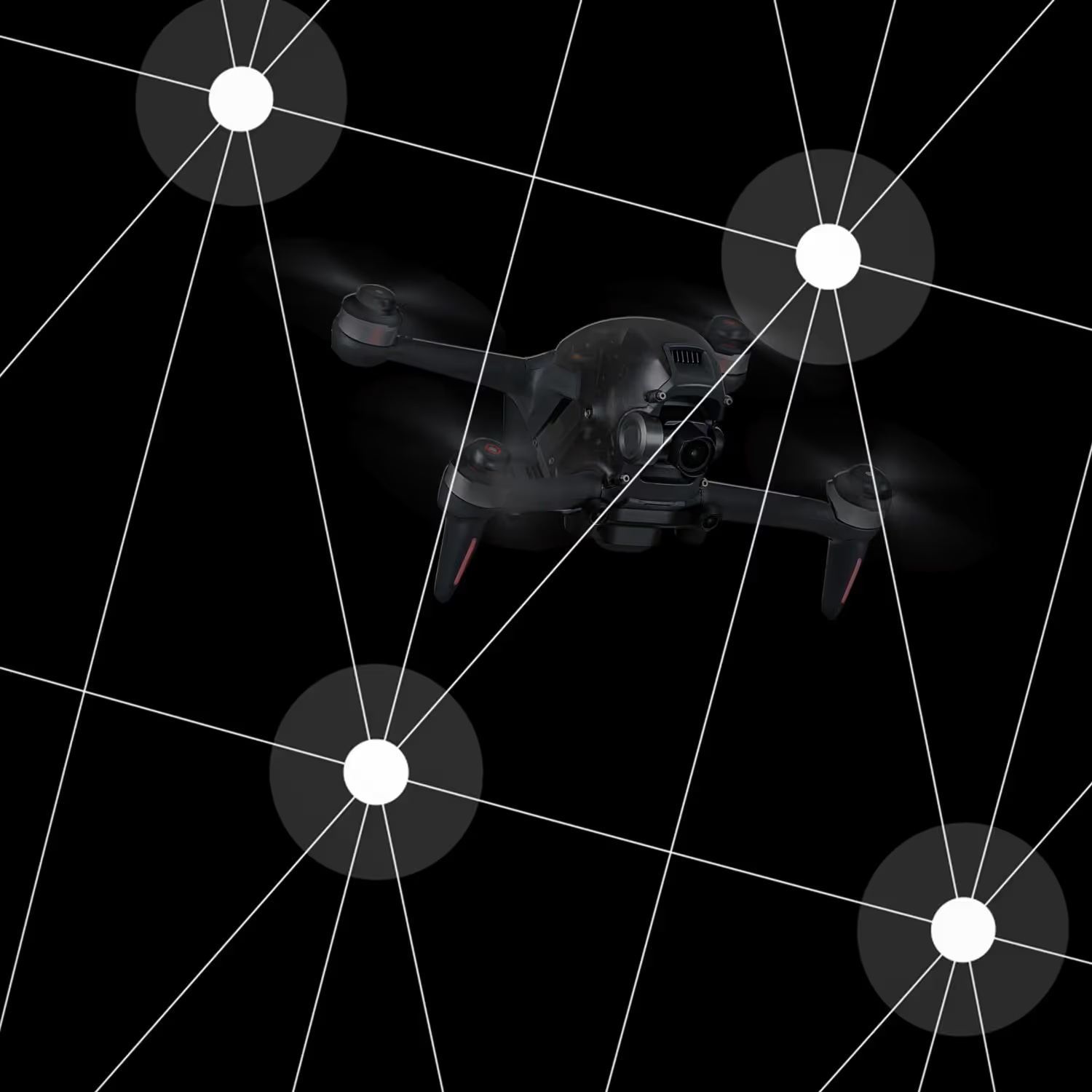
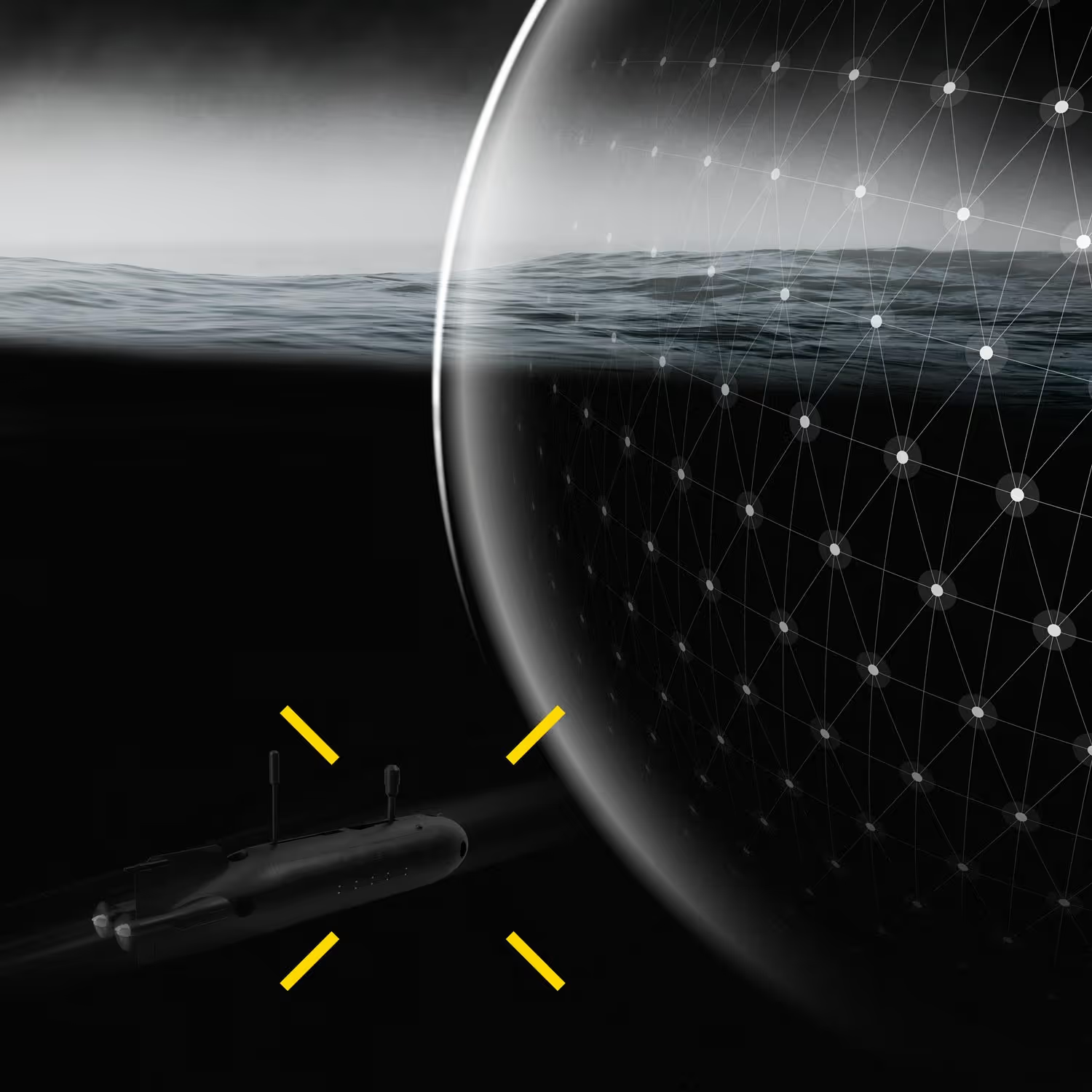
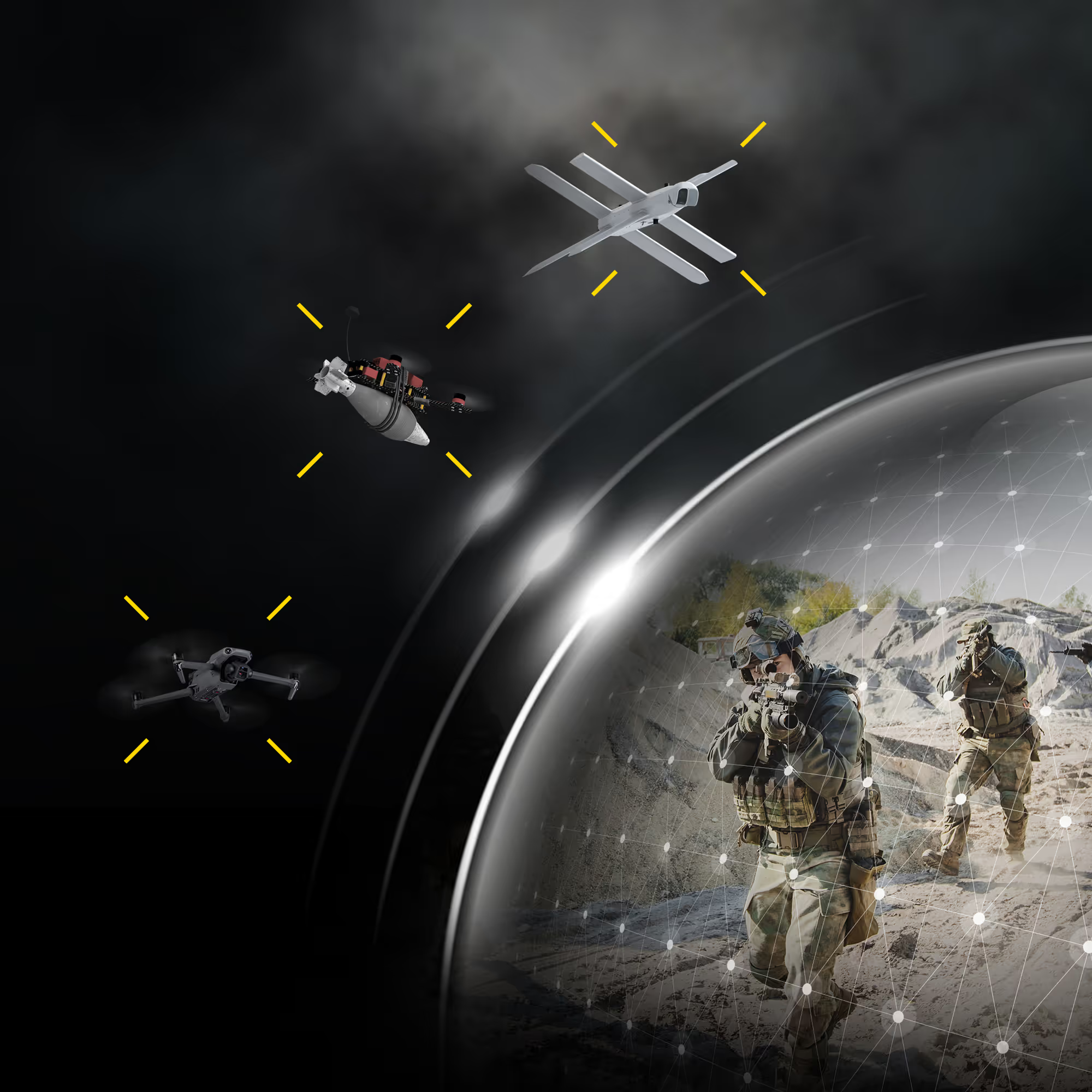
The dome as Dedrone's key visual instinctively signals protection to the human mind. From an early age, safety is learned as something that comes from being covered: the first enclosed space we ever experience, a helmet over the head, a roof over a house.
For eleven years, the dome has remained a flexible and enduring element of Dedrone's identity. Its consistency has strengthened global brand recognition and enabled Dedrone to scale marketing across all channels.
The dome became a standard in the CUAS industry for marking protected areas. Many competitors attempted to replicate it, so we decided to recreate the pattern in the age of AI to differentiate. None of them achieved the same visual impact or demonstrated the versatility to use it consistently across so many variations. We even used abstract 2D versions on letterheads, business cards, awards, and brochures, and 3D versions in VR experiences.
Dedrone's customers still love the dome.

Deliver
The Knowledge Cycle
Brand guidelines can appear effective during a company's early stages, but challenges emerge as organizations scale. When businesses expand their teams, product lines, or markets, the original brand framework often begins to fracture.
The symptoms become visible quickly. Different departments interpret the brand differently. Decision-making slows as stakeholders debate applications. Brand identity quickly loses consistency.
As a brand manager at Dedrone, I discovered that empowering teams with practical resources they genuinely want to use delivered superior results compared to distributing 80-page brand guidelines as a PDF.
The solution doesn't lie in creating additional restrictions or more detailed specifications. The key was establishing an iterative process: creating and sharing assets based on the brand guidelines and frameworks, learning from how stakeholders applied them in practice, then refining those assets based on real-world feedback.
Impressions
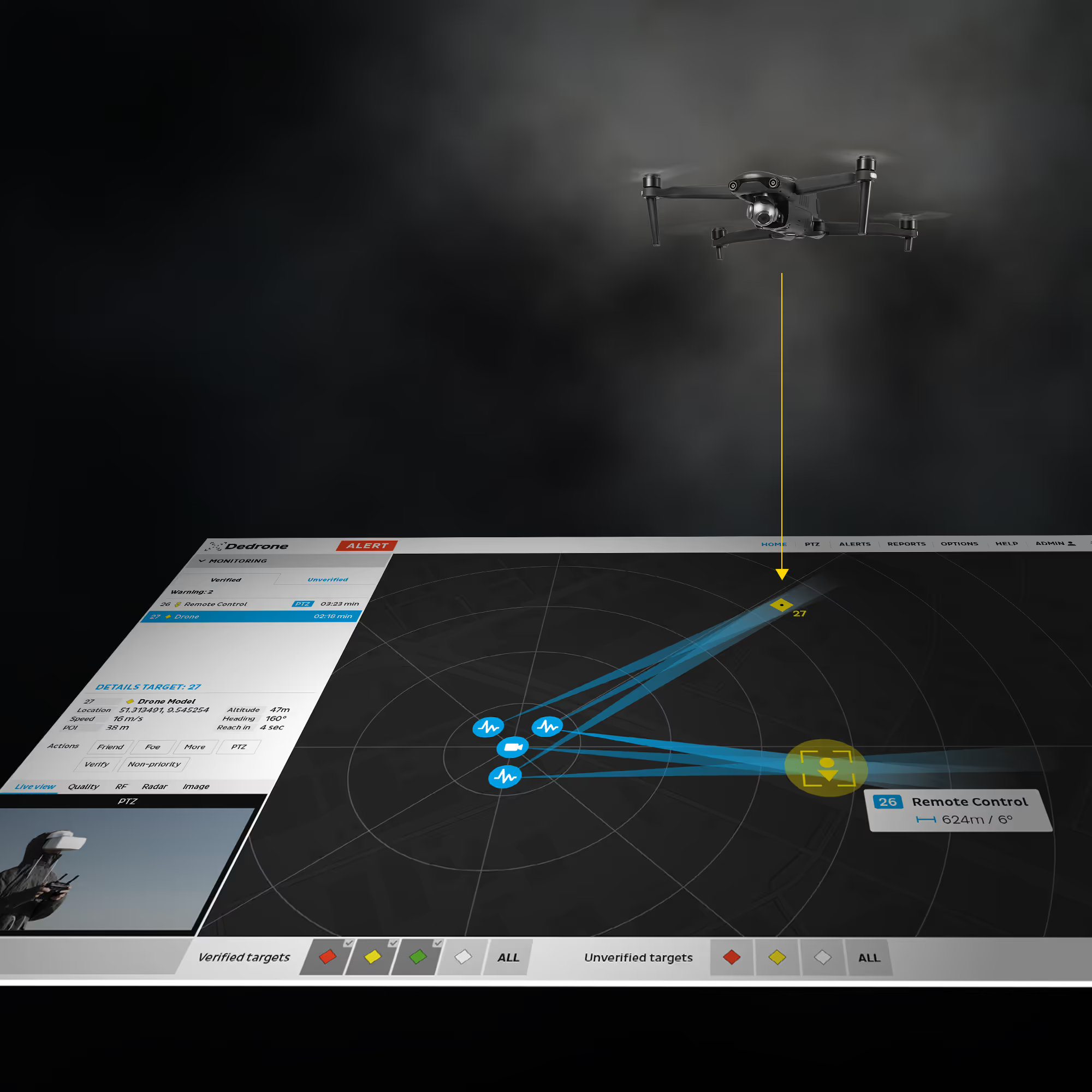
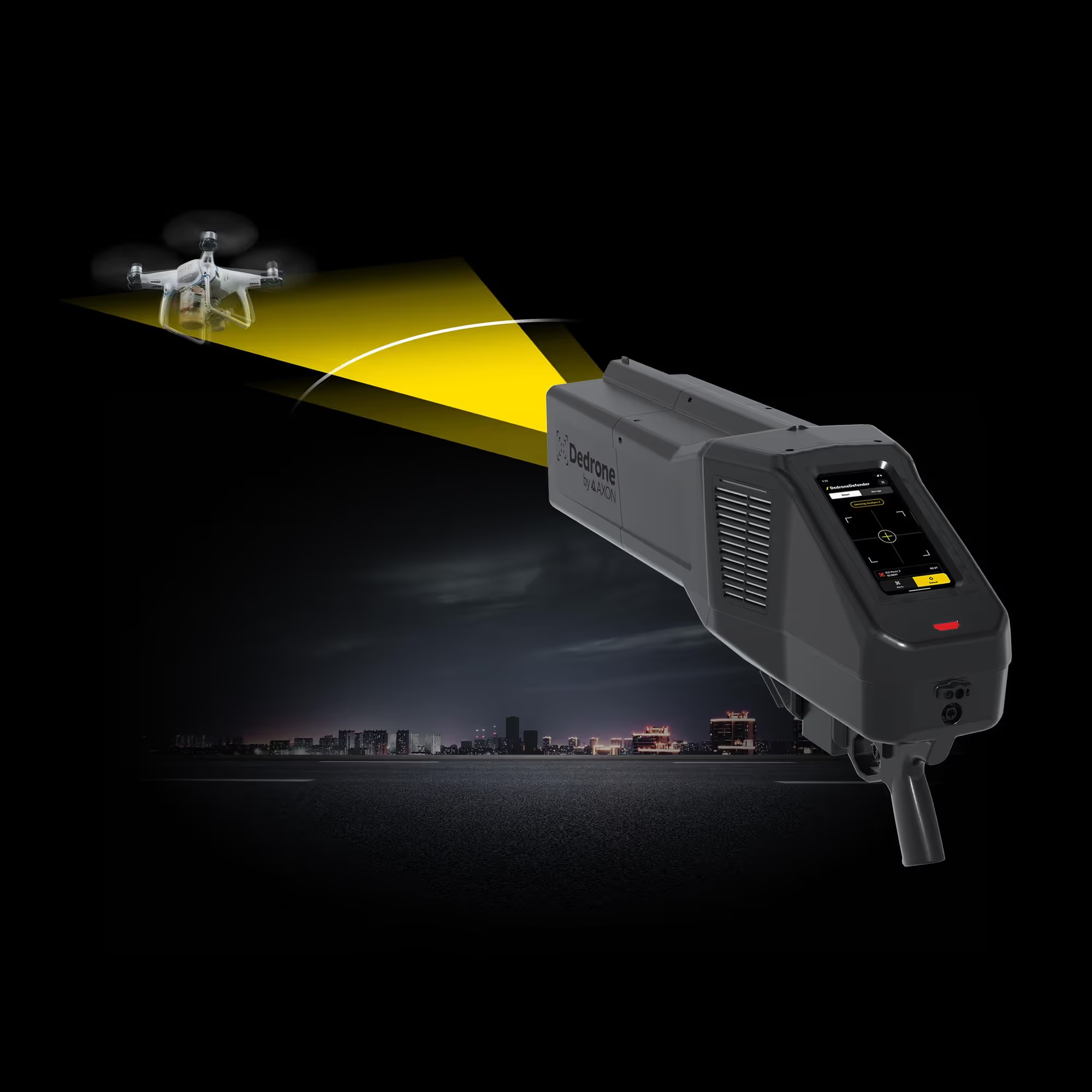
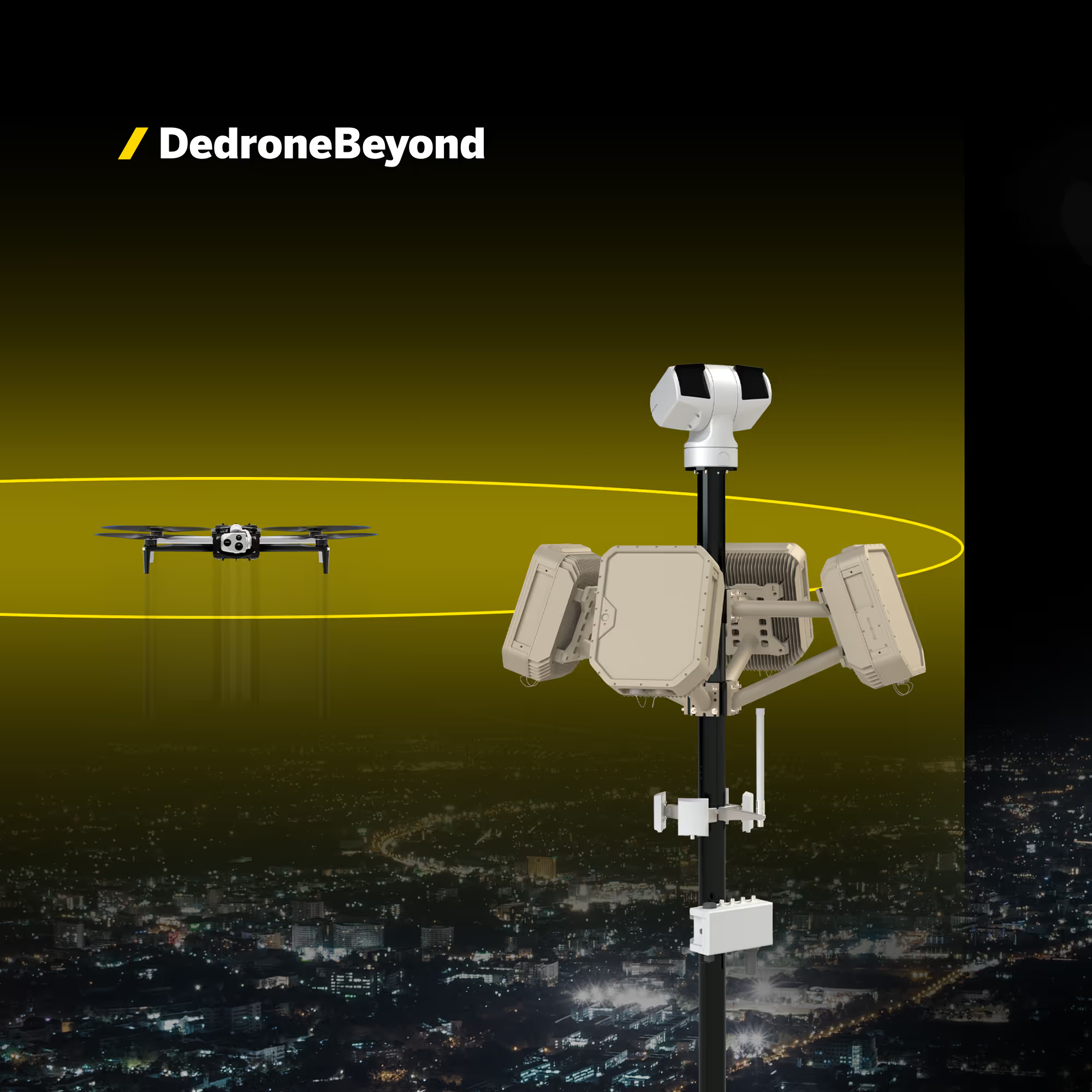
Example assets that were part of templates like presentations, brochures, videos, social and other collateral.

Experience
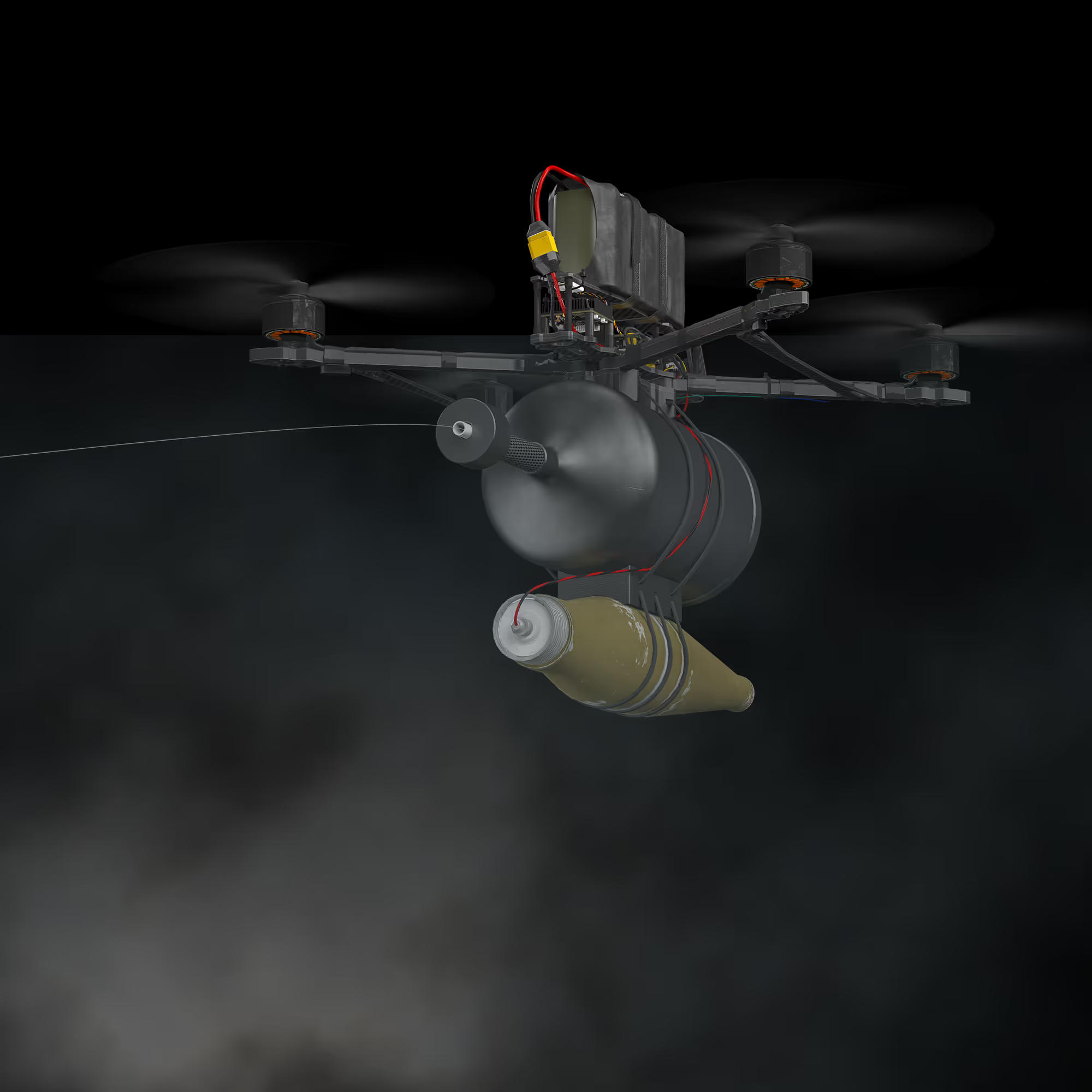
In seconds, abstract risk becomes physical: speed, threat, loss of control. At Dedrone, I had the idea to create an immersive drone threat experience – an eye-catching trade show element designed to trigger emotion, not just the rational brain.
A minimalistic video visualizes distant drone swarms as small points on the horizon – then, within seconds, they reach the viewer. A flashing red background suggests impact, leaving the danger to the imagination. The human brain prioritizes lived experience over abstract information. People remember how they felt, not what they read in a spec sheet.
Instead of showing only a counter-drone device like every competitor, we let people experience the threat in a safe environment.
The experience does something smart:
Belief: “This is overwhelming”
Vulnerability: “I’m exposed”
Urgency: “This must be stopped”
This is where it pays off.
The conversation shifts from features and price points to capability, coverage, and operational readiness.
The video shows a short excerpt of a much larger experience with different drone types and threat scenarios.
Threat Experience

Proof
Convert Proof Into Pipeline
Years ago, we started collecting drone incidents from the news, manually adding them to a database and presenting them on our website to raise awareness of the growing threat drones can pose. Very quickly, our competitors began imitating our drone incident database, and we lost our competitive advantage.
I then had the idea to use aggregated data collected by our DedroneCity solution, sourced from 500+ sensors across 50+ cities in the U.S. Together with the data science team, I helped create what became the premier resource for drone public safety analytics.
Built on real-world sensor data rather than curated news reports, the Drone Violations Database delivers insights that others simply cannot replicate. Often quoted by the press and a strong sales tool.
The Premier Resource for Drone
Public Safety Analytics

Reach
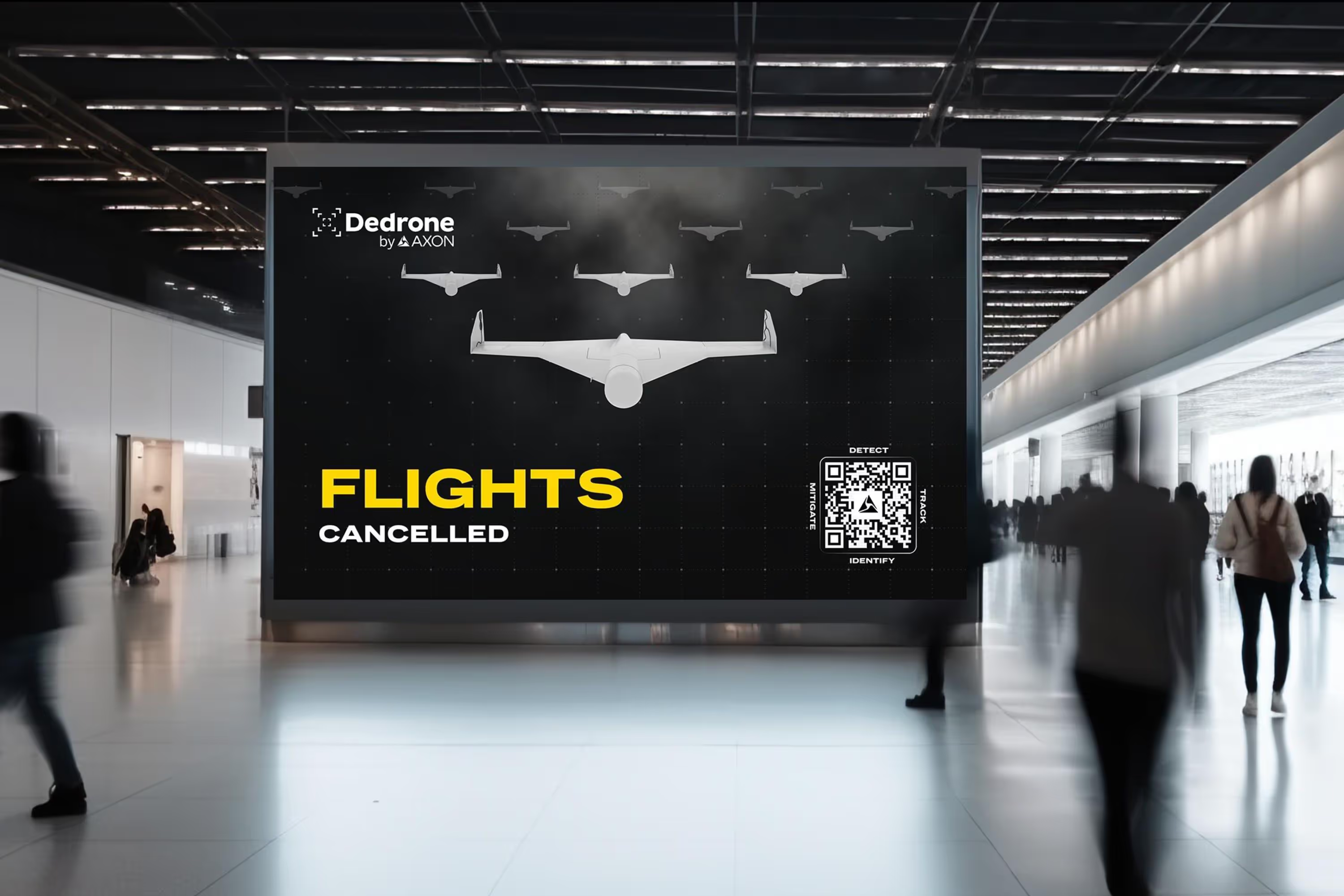
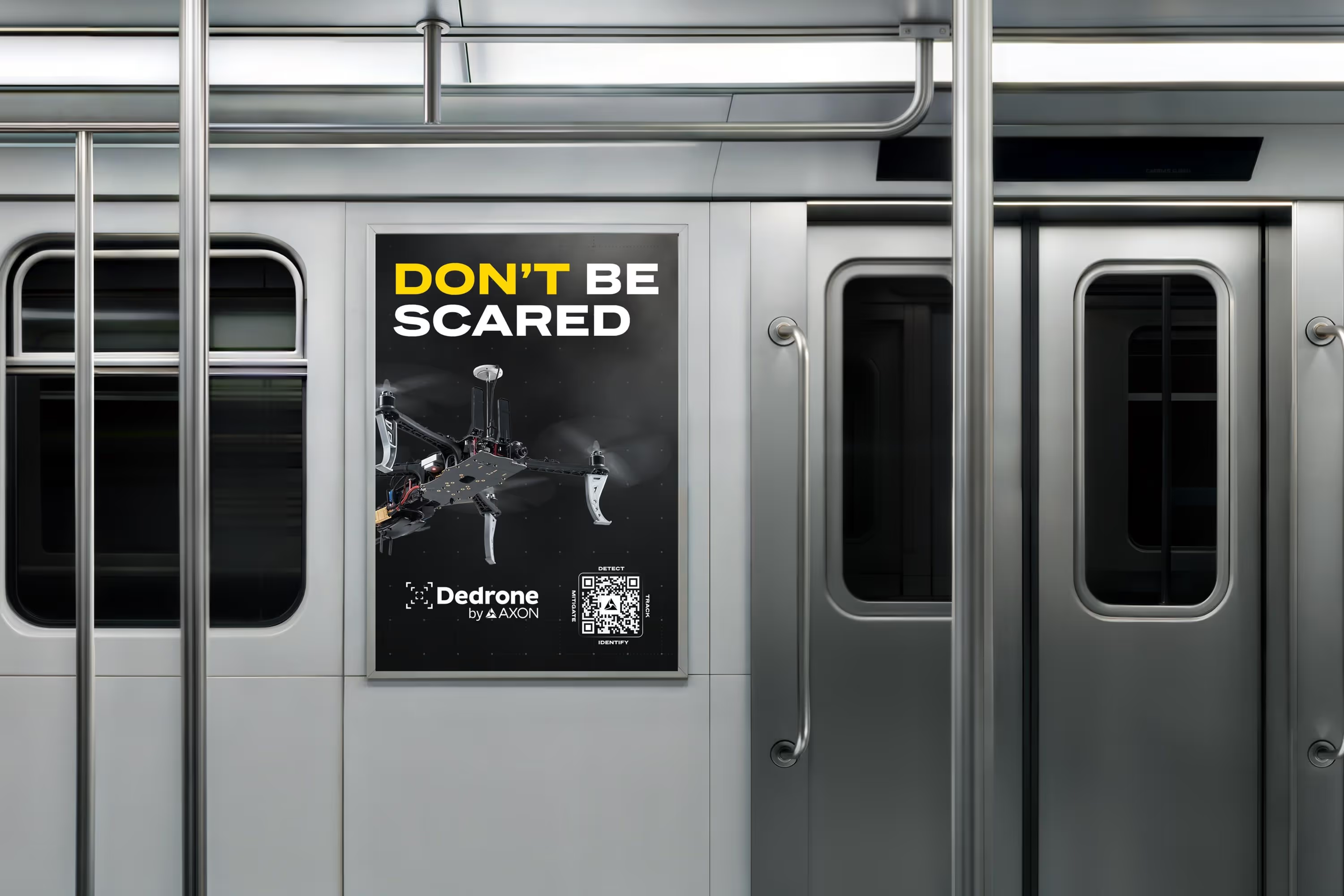
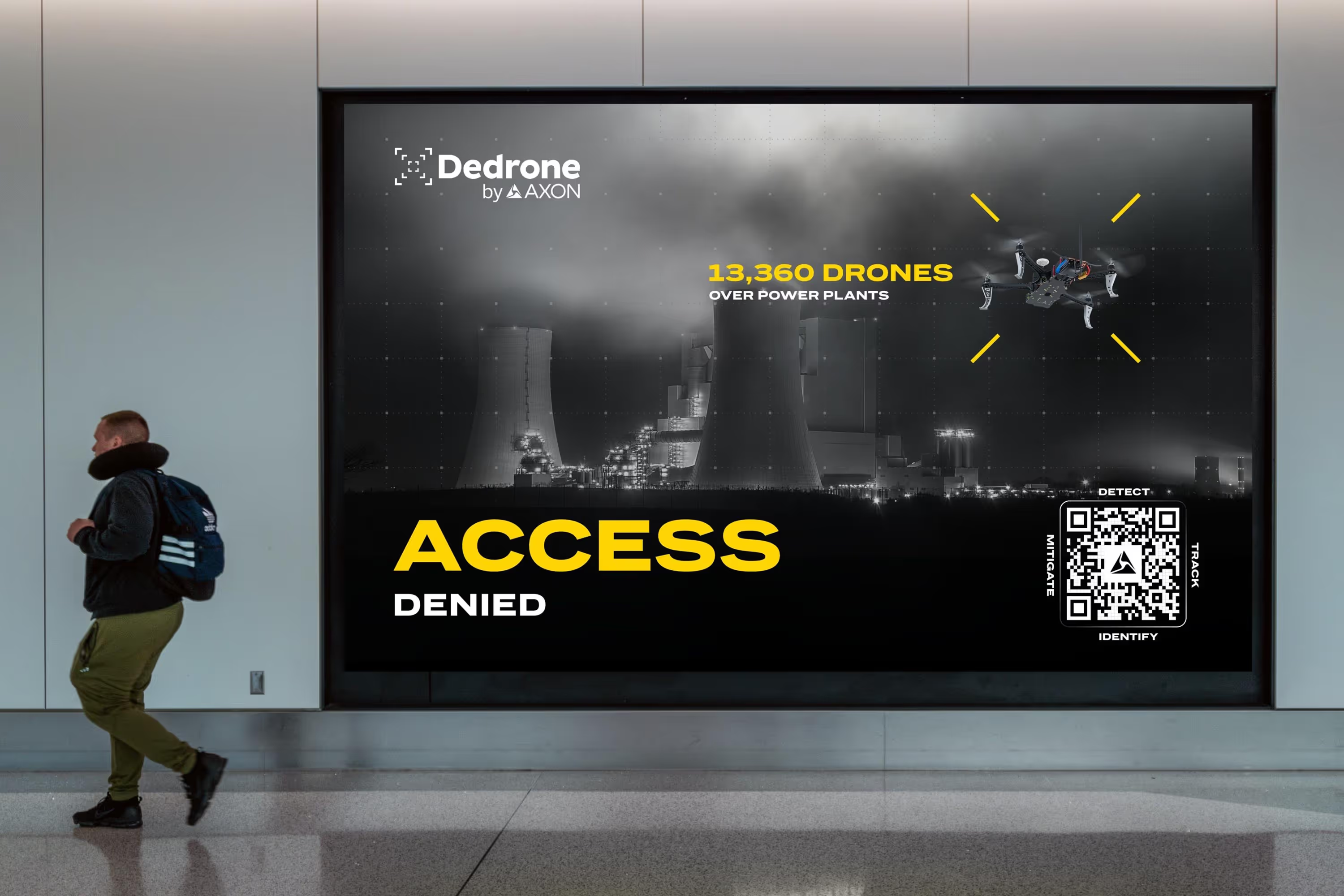
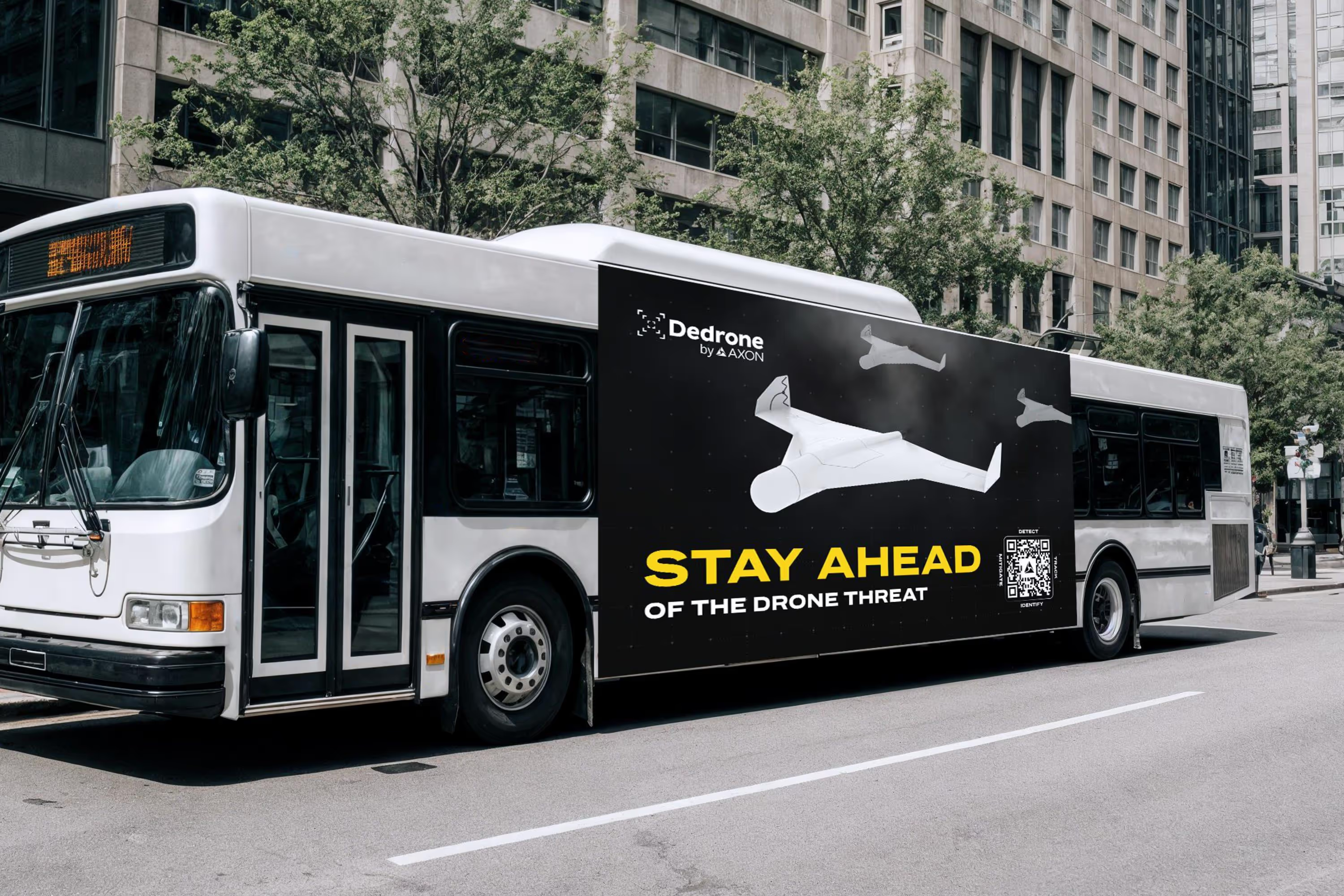
Top-of-mind means being the first brand people think of when they consider a category. When a politician hears about a drone threat, you want them to immediately think of Dedrone before any competitor even enters their mind.
OOH achieves this through repeated, passive exposure. Politicians see Dedrone on their commute every day. They're not actively engaging, but the image accumulates. Then when the need arises (a security briefing, a defense budget discussion, a committee hearing) Dedrone surfaces first.
The goal is occupying mental real estate before the legislative moment even begins. The campaign needed to raise attention and resonate within a few seconds, without requiring the audience to think.
These drafts were initially created for a campaign in Washington DC, then adapted for Australia. I left Dedrone before the campaign was refined and launched, so I don't know if it ever came to life.

Gamify
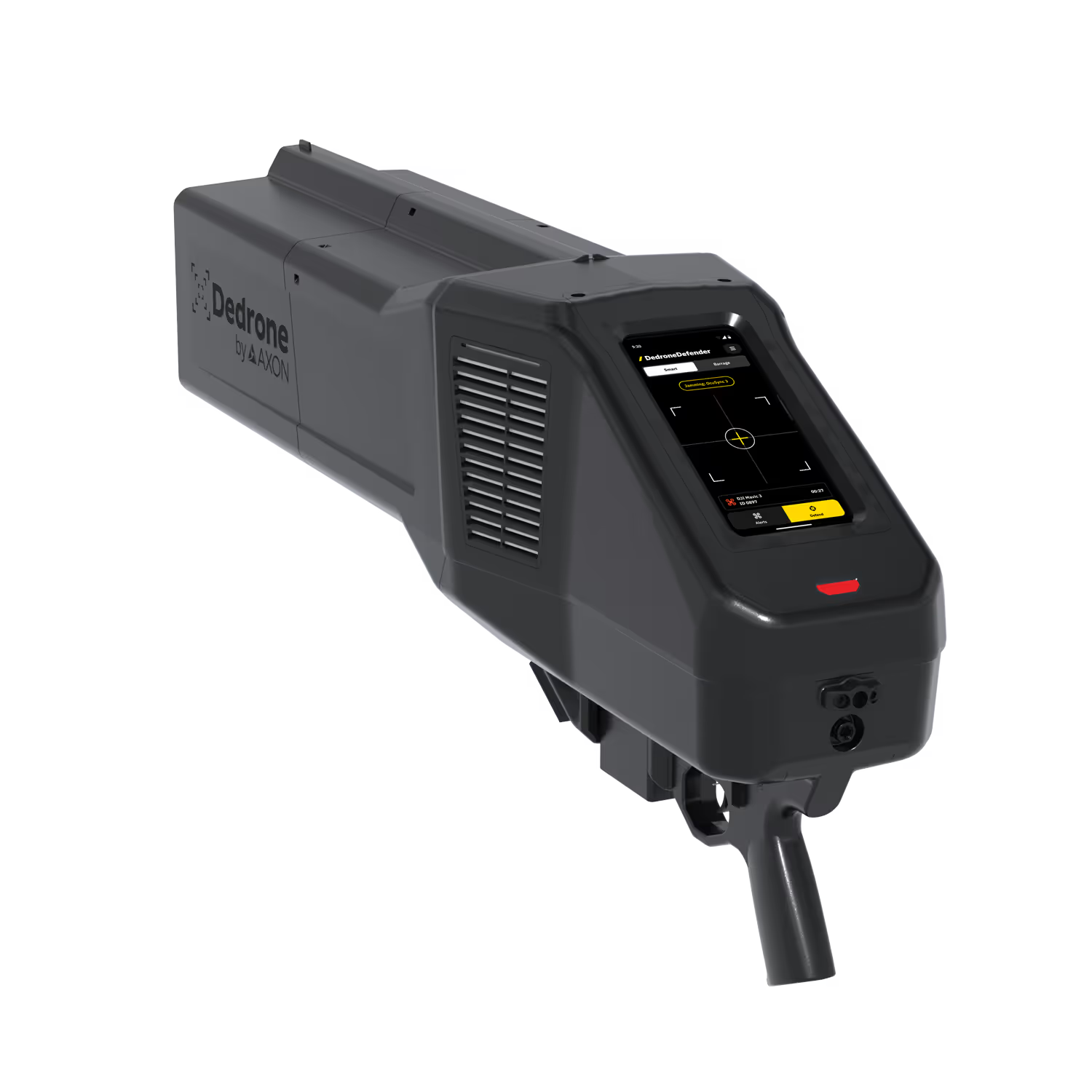
Neutralize the Invisible
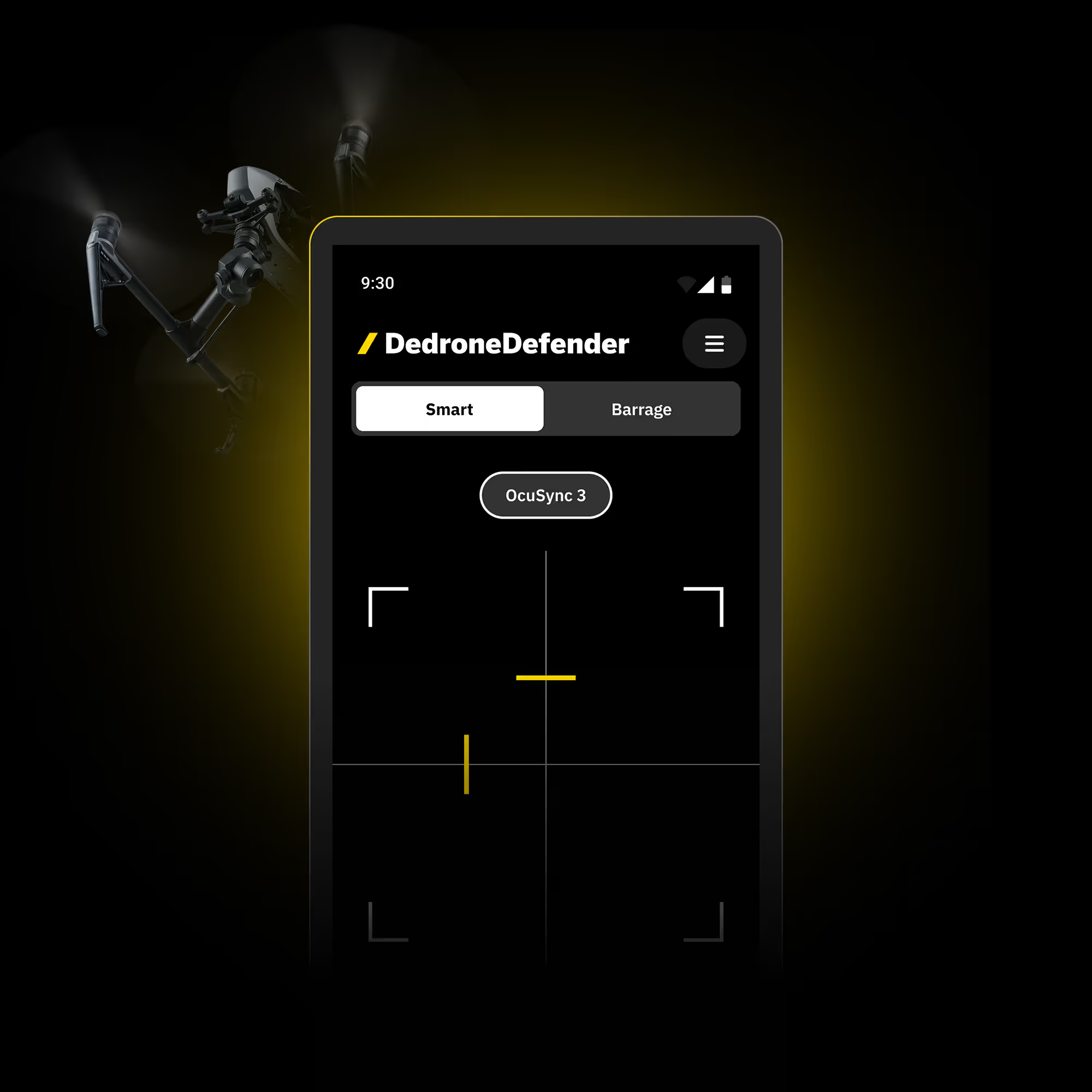
Imagine you're standing in the field with your jammer when you get a drone alert, but you have no idea which direction the threat is coming from. It could be approaching from behind, or if you're positioned on elevated terrain, even from below. Drones move fast, so every second counts. You can't see it yet. You're essentially hunting a ghost.
That's why I designed a UI with intuitive targeting guidance. Instead of overwhelming the operator with data, it provides one simple instruction: move the jammer until the two moving lines on the X and Y axes meet in the center, forming a crosshair. When they align, you've locked onto the target and will successfully jam the drone, even before you can see it with your own eyes.
The interface translates complex spatial tracking into a single, actionable task: align the crosshair. Right, left, up, down. The operator immediately understands which direction to adjust the jammer, making threat response faster and more intuitive under pressure.